Best Pico Laser Tattoo Removal Machine with 2 Rods & Lamps
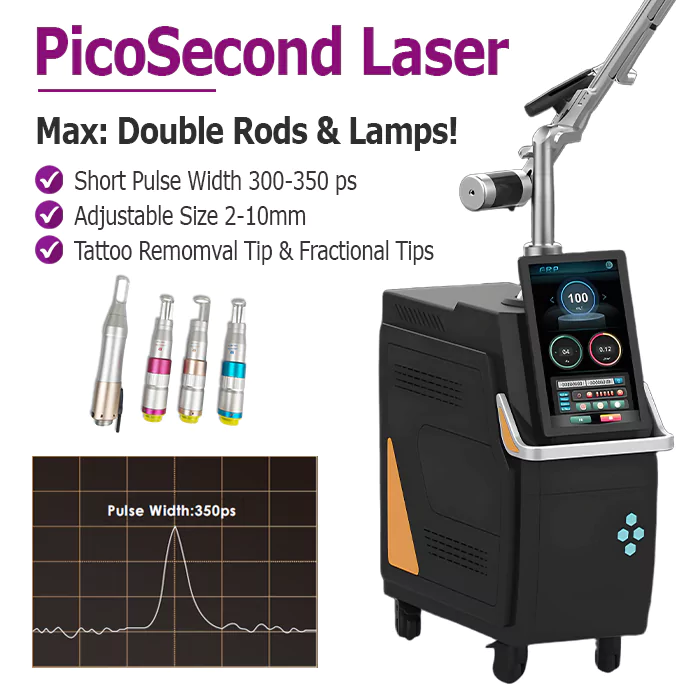
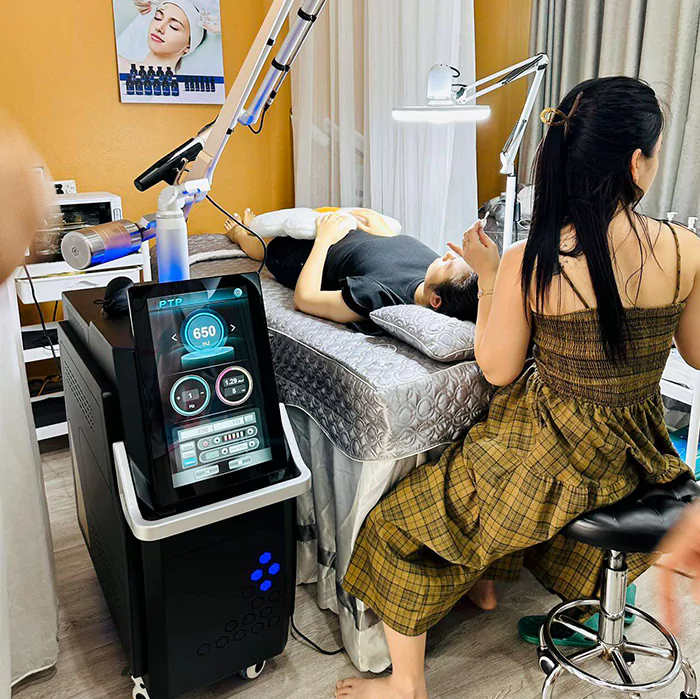
Pico Laser Tattoo Removal Machine produced by FBL company featuring Double Rods & Double Lamps for ultimate peak power. Our machine has ultra-short pulse width of 300–350ps and an adjustable spot size from 2 to 10mm. Complete with dedicated tattoo removal and fractional tips. Factory-direct wholesale pricing and OEM options for worldwide aesthetic distributors and medspas. Get a quote today!
picosecond laser tattoo removal machine: what it is?
A picosecond laser is an advanced medical and aesthetic laser technology designed primarily for tattoo removal, hyperpigmentation treatments (such as melasma, sun spots, and freckles), and non-invasive skin rejuvenation.
The defining characteristic of this laser is its incredible speed. It emits light energy in pulses that last only a picosecond (one-trillionth of a second). To put this into perspective, a picosecond laser operates up to 1,000 times faster than older-generation nanosecond Q-switched lasers.
Main functions:
- Multi-Color tattoo removal
- Pigmentation & Melasma Treatment
- Non-Invasive Skin Rejuvenation
- Wrinkle Reduction
- Acne Scar Remodeling
- Hollywood Carbon Peel
- Onychomycosis treatment
Why Picosecond Laser is the best?

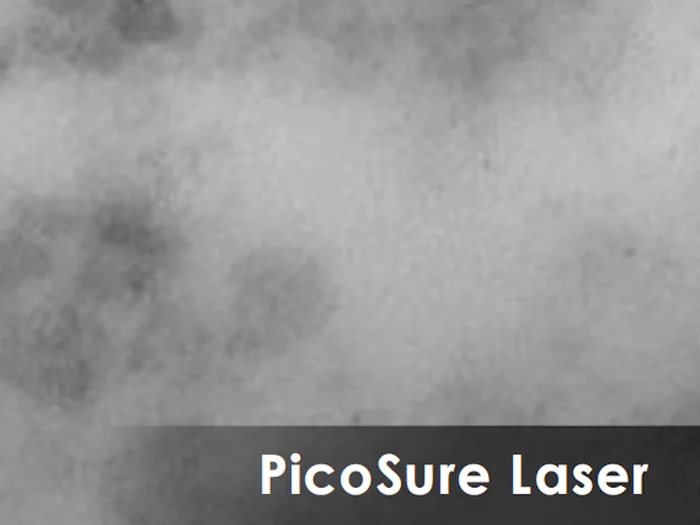
🤩 Picosecond Laser (Ours)
But with our pico Laser, Due to the ultra-short picosecond pulses, the energy is delivered so rapidly that the ink particles don't have time to heat up significantly. Instead, the rapid energy absorption creates an intense photoacoustic shockwave (a pressure wave). This shockwave shatters the ink particles into much finer, "dust-like" fragments, rather than just breaking them into larger pieces. With such fragments, it will be much more easier for body to clear them out.
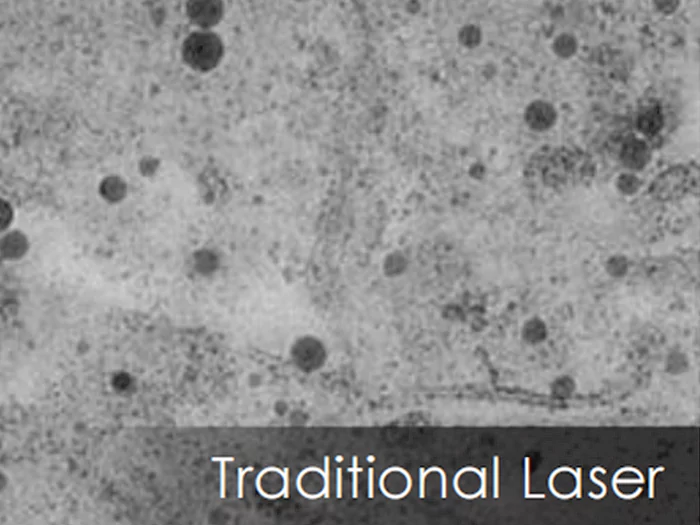
😒 Nanosecond Laser (Others)
ND yag Laser is nanosecond laser, it primarily rely on a photothermal effect. They heat the ink particles rapidly, causing them to expand and shatter into smaller pieces (big particles). However, this heat can sometimes spread to surrounding tissue, potentially causing more discomfort, downtime, and a higher risk of side effects like scarring or hyper/hypopigmentation.
Compare of Picosecond Laser & ND Yag Laser
| Comparison Feature | Picosecond Laser (Our Tech) ⚡ | Q-Switched Nanosecond Laser ⏳ |
|---|---|---|
| Pulse Duration (Speed) | 300 – 350 picoseconds (One-trillionth of a second). | 5 – 20 nanoseconds (One-billionth of a second). |
| Core Working Principle | Photomechanical / Photoacoustic (Shatters pigment via sound/shockwaves). | Photothermal (Heats up and burns the pigment). |
| Pigment Destruction Level | Pulverizes ink/melanin into microscopic "dust" particles for rapid lymphatic flushing. | Breaks ink/melanin into larger "pebble" fragments, making clearance slower. |
| Treatment Depth & Power | Max Double Rods & Lamps config ensures ultra-deep, stable dermal penetration. | Single rod configuration; power drops or pulse width widens at deep settings. |
| Average Tattoo Sessions Required | 3 – 5 sessions (Fast ink clearance). | 10 – 15+ sessions (Slow, stubborn clearance). |
| Surrounding Skin Safety | Maximum Safety. No heat transfer means near-zero risk of scarring or tissue damage. | Moderate Risk. High thermal heat accumulation can blister or damage surrounding skin. |
| PIH / Hyper-pigmentation Risk | Extremely Low. Ideal and safe for darker skin tones (Fitzpatrick Types IV–VI). | Higher Risk. Heat can easily trigger rebound hyperpigmentation in darker skin tones. |
| Client Pain & Comfort Level | Minimal discomfort; feels like a light snap. Smooth, rapid treatment. | High pain level; requires strong numbing creams due to heat exposure. |
| Clinical Versatility | Multi-functional: Multi-color tattoo removal, melasma, acne scar remodeling, and fractional rejuvenation. | Limited mostly to black/dark tattoo removal and basic surface spots. |
| Post-Treatment Downtime | Zero to minimal downtime. Fractional treatments have hours of mild redness. | Significant downtime. Frequently causes bleeding, scabbing, and weeping wounds lasting 7–14 days. |
3 professional modes
In professional, high-end picosecond laser machines, SP, PTP, and FRP represent distinct pulse delivery modes. By altering how the laser energy is packaged and delivered over time, these modes allow a clinic to switch seamlessly between shattering ink, treating sensitive hormonal pigmentation, or performing deep thermal skin rejuvenation using a single machine.
Here is a detailed breakdown of the differences, working mechanisms, and clinical applications for each mode:
⚡ SP (Single )
Core Definition: SP stands for Single Pulse, which is the classic, standard operational setting for high-performance picosecond lasers.
Working Mechanism: It fires one highly concentrated, ultra-short laser pulse per trigger pull, delivering all selected energy in a single razor-sharp peak lasting 300 to 350 picoseconds.
Primary Effect: Generates the ultimate photomechanical shockwave to forcefully pulverize dense pigment into microscopic dust particles.
Best Clinical Applications: Designed specifically for clearing stubborn multi-colored tattoo inks and sharp-edged isolated lesions like sun spots, age spots, and Nevus of Ota.
Client Sensation: Feels like a single, sharp rubber band snap on the skin.
🎯 PTP (Twins)
Core Definition: PTP stands for Photoacoustic Twin Pulse, an advanced modality engineered for maximum skin safety and comfort.
Working Mechanism: Instead of a single burst, the machine splits the selected energy into two consecutive micro-pulses fired back-to-back within nanoseconds of each other.
Primary Effect: The first micro-pulse prepares the pigment by subtly shifting its optical properties, allowing the second micro-pulse to shatter it effortlessly with lower epidermal stress.
Best Clinical Applications: The gold standard for treating Melasma and hormonal pigmentation without triggering heat-induced rebound darkening. It is also perfect for darker skin complexions (Fitzpatrick Types IV–VI) and sensitive clients.
Client Sensation: A very comfortable, mild tingling feeling with drastically reduced peak pain compared to single pulses.
🧬 FRP (Fractional)
Core Definition: FRP stands for Fractional Repeater Pulse, a specialized setting that turns your laser into a deep skin rebuilding powerhouse.
Working Mechanism: It delivers a rapid, closely-spaced train of micro-pulses distributed across a fractional grid pattern.
Primary Effect: Triggers Laser-Induced Optical Breakdown (LIOB)—creating microscopic pressure bubbles deep within the dermis that stimulate massive new collagen and elastin production while leaving the top layer of skin completely undamaged.
Best Clinical Applications: Highly effective for deep acne scar remodeling, wrinkle reduction, skin tightening, stretch mark removal, and performing the popular Hollywood Carbon Peel.
Client Sensation: A rapid, warm snapping sensation across the treatment area.
Max Power: Dual-Rod & Dual-Lamp
When it comes to advanced pigment clearance, raw clinical power and energy stability are everything. While standard, single-rod machines often struggle with power drops or pulse widening during intensive treatments, our premium laser tattoo removal machine features the max version – we use Double Rods & Double Lamps laser cavity. This medical-grade design acts as an internal optical amplifier, offering several critical advantages for most high-end tattoo removal medspas:
Maximum Peak Power: Combining two Nd:YAG laser rods and two flashlamps doubles the energy output capacity, providing unmatched peak power to shatter the toughest ink pigments.
Superior Energy Stability: The dual-rod setup acts as an optical amplifier, ensuring highly stable energy delivery without power drops during long, continuous treatment sessions.
Pure Photomechanical Effect: By hitting high energy thresholds effortlessly, the system maintains a true 300–350ps pulse width without widening into heat-based nanosecond delivery, reducing patient pain.
Uncompromised Deep Penetration: Provides the heavy-duty power needed to maintain high energy density ($J/cm^2$) even at large 10mm spot sizes, successfully targeting deep dermal ink.
Extended Hardware Lifespan: Splitting the operational workload between two separate lamps and rods prevents the components from being pushed to their stress limits, drastically increasing optics longevity.
Reduced Salon Downtime: The system runs cooler and more efficiently than overworked single-rod machines, minimizing thermal lens effects and lowering device failure rates.
pico laser tattoo removal machine data sheet
| Product name | FocusPico |
|---|---|
| Working Wavelength | 3 in 1 Tip: 1064nm, 532nm, 755nm, and one set fractional tips: 532nm, fractional 1064nm and honeycomb 755nm |
| Power Supply | 3000W |
| Lamp& Rod | Max 2 Lamps + 2 rods |
| Frequency | Max 10hz |
| Energy | Max 2000mj |
| Working Modes | SP, PTP, FRP |
| Spot Size | 2-10mm Adjustable |
| Pulse Width | 350-450PS |
| Single Max Output Power | 1064nm (100-1200mj); 532nm (50-600mj); 755nm (100-1200mj) |
| Cooling System | water circulation + air cooling system |
| Over-current Protector Model | 220V 10A |
Get Quotation Now!
Best Pico Laser Tattoo Removal Machine with 2 Rods & Lamps
Related Beauty Machines
Related products
-
Lasers & IPL
Long-Pulsed 755 Alexandrite 1064 Nd Yag Laser Hair Removal Machine
Read moreRated 0 out of 5